


Bridges are subject to continuous movement and loading over their service life. Bridge decks and their structural joints are continuously exposed to traffic loads, temperature changes, and environmental factors that affect their long-term performance. If there are inadequate movement provisions, these forces can lead to cracking, joint damage, and deterioration of the connections to the structural elements.
An expansion joint is there to take up the movement between adjacent bridge sections. When correctly selected and installed, it will allow for structural movement, provide a suitable driving surface and help to protect the more vulnerable elements from water and debris.
For bridges carrying heavy vehicles, selecting the appropriate joint is essential and will depend on the traffic loading, the movement capacity required, the materials used, and the installation requirements.
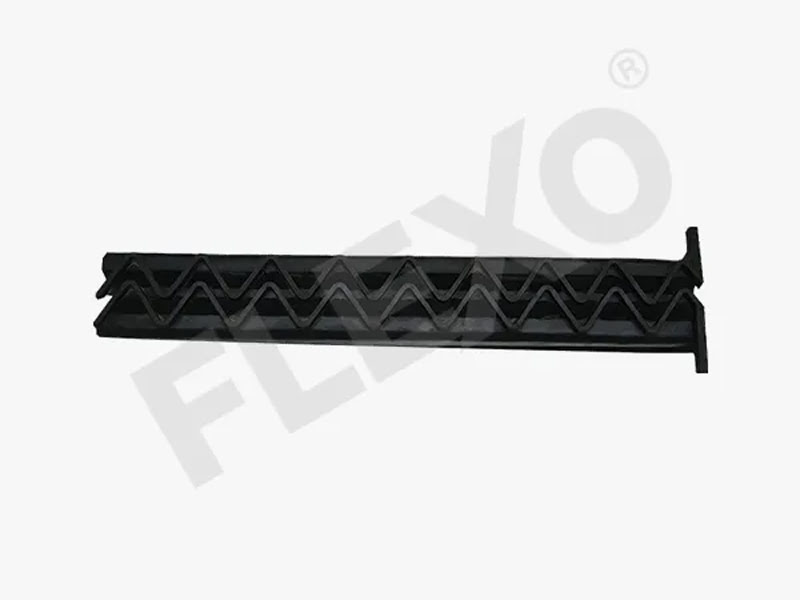
What Are Expansion Joints in Bridges?
Expansion joints in bridges are components installed between adjacent sections of the bridge deck and at the various structural connections. Their purpose is to allow for movement due to temperature changes, concrete shrinkage, traffic loading, and all the other sorts of structural movement.
In hot weather, the bridge materials will expand, and in cold weather they will contract. If the structure isn’t able to take that movement, then there will be stress.
Bridge expansion joints provide the necessary movement allowance and at the same time provide a functional transition between the various sections. They can also be designed to help keep water and road debris out of the susceptible areas underneath the bridge deck.

Why Do Bridges Need Expansion Joints Under Heavy Traffic?
Heavy vehicles create a massive amount of repetitive force as they go over bridge decks. Trucks and buses in particular are very demanding on the joint assembly, particularly on the highways and flyovers where you’ve got a lot of traffic.
A properly specified expansion joint serves several purposes:
- Accommodates movement: Allows the bridge to expand and contract with temperature changes.
- Supports traffic loading: Transfers vehicle-induced forces through the joint assembly to the supporting structure.
- Controls structural stress: Reduces the undesirable restraint between the connected bridge sections.
- Maintains surface continuity: Provides a suitable transition for vehicles crossing the joint.
- Limits water penetration: Sealed joint systems will help to protect the supporting components from water and from debris.
The joint must be selected according to the actual loading and movement requirements of the bridge rather than on the basis of traffic volume.
How Do Bridge Expansion Joints Handle Heavy Vehicle Loads?
Bridge expansion joints are subject to repeated loading as vehicles cross them. Their performance is a function of the complete assembly, including the supporting components, the material properties, the anchorage, and the installation.
Here are four important considerations:
1. Load Transfer
Steel components within appropriate joint assemblies are used to transfer the forces generated by the wheels to the supporting structure. The size of the components, the nature of their connections, and the structural capacity of the joint assembly must be in accordance with the engineering requirements of the project.
2. Movement Accommodation
Rubber components provide flexibility and are able to deform as the joint moves. The degree to which they can recover is a function of the rubber compound, the design and the operating conditions.
3. Surface Continuity
Correct joint alignment and installation will help to ensure a good transition between adjacent bridge deck sections and therefore help to minimize the undulations at the crossing.
4. Repeated Loading
Throughout their service life, bridge joints experience repeated traffic loads. Their long-term performance depends on material quality, joint design, connection integrity, and regular inspections.
The AASHTO LRFD Bridge Design Specifications provide an established engineering framework for evaluating bridge loads, structural behavior, and design requirements.
How Do Temperature Changes Affect Bridge Expansion Joints?
Temperature is a major factor in bridge movement.
Concrete and steel expand and contract with temperature. The quantity of movement is a function of the material, the length of the bridge, the temperature range, and the structural configuration.
For instance, a long bridge deck in direct sunlight will experience more thermal expansion than a shorter bridge. Its expansion joint must be capable of taking up the calculated movement without impeding the bridge or going beyond its design capacity.
Eurocode EN 1991-1-5 addresses thermal actions, while EN 1991-2 covers traffic loads on bridges. Both provide relevant engineering provisions for bridge design.
What Materials Make Expansion Joints Suitable for Bridges?
Material selection has an effect on the flexibility, the structural support, and the service performance of an expansion joint.
Common materials include:
- Rubber: Provides flexibility and helps to take up movement. The right rubber compounds can also provide a sealing effect.
- Steel plates: Form supporting components within certain joint assemblies and assist in the transfer of applied loads.
- Angle iron: Can provide additional structural support and connection points as appropriate to the assembly design.
We manufacture bridge expansion joints using rubber, steel plates, and angle iron. This combination brings together the flexibility of rubber and the supporting function of steel components.
Material testing can help assess specific properties. For example, ASTM D412 evaluates rubber tensile properties, while ASTM D395 measures compression set. These tests assess material characteristics; they do not independently establish the load capacity or suitability of a complete bridge joint.

Why Are Proper Installation and Maintenance Important?
An appropriately specified expansion joint can still go wrong if it’s not installed correctly or if it’s not properly maintained. It can be affected by incorrect alignment, insufficient anchorage or insufficient movement clearance.
Bridge maintenance teams should regularly check for:
- Cracks, splits, or deterioration of rubber parts.
- Loose, damaged, or corroded steel.
- Uneven surfaces around the joint.
- Water leakage and a buildup of debris.
- Damaged or displaced sealing material.
The Federal Highway Administration’s bridge inspection guidance identifies joint seals, debris, leakage, and damage to surrounding components as inspection considerations.
Inspection frequency should be in line with the bridge maintenance plan, the relevant standards, and the actual site conditions.
How Do Polycrafts Expansion Joints Support Bridge Infrastructure?
Polycrafts (Pvt.) Ltd. is a rubber products manufacturer based in Karachi, Pakistan, serving construction, automotive, and industrial sectors.
Through our Flexo Guard brand, we manufacture rubber bridge expansion joints for infrastructure applications, including bridges, flyovers, and railway projects.
The assemblies are a mix of rubber, steel plates, and angle iron. The rubber provides the flexibility and the steel the strength.
Every bridge project has different requirements. Traffic loading, anticipated movement, environmental exposure, joint dimensions, and installation conditions must all be evaluated before selecting a suitable expansion joint.
For project-specific selection, the engineer should check the manufacturers’ data and ensure that the proposed assembly is in fact appropriate for the project’s design.
How to Choose the Right Expansion Joint for Your Bridge Project
Before selecting an expansion joint, consider these five factors:
- Traffic load: Determine the anticipated vehicle loading, traffic frequency, and applicable design requirements.
- Movement capacity: Establish the requisite degree of expansion, contraction, and so on.
- Material properties: Check the rubber and steel specs against the project specs.
- Environmental exposure: The temperature, rainfall, moisture, and all other environmental conditions at the site.
- Installation compatibility: The joint design, the anchorage, and the dimensions must be suitable for the bridge.
Consult a qualified bridge engineer and check the manufacturer’s documentation to ensure that you don’t select an inappropriate product.
Conclusion
Choosing the right bridge expansion joint is absolutely critical in order to accommodate the movement of the structure and to cope with the repeated loading from traffic. Performance over the long term will be a function of the material properties, the joint design, the quality of installation, and the level of maintenance.
We offer bridge expansion joints manufactured with rubber, steel plates, and angle iron for infrastructure applications.
Contact Polycrafts to discuss your bridge project requirements and request product specifications for a suitable expansion joint.
Frequently Asked Questions
What is the main purpose of expansion joints in bridges?
They allow for movement as a result of temperature changes, shrinkage, etc., while still maintaining a functional connection between the bridge sections.
How do bridge expansion joints handle heavy traffic?
Their assemblies are designed to allow for movement and to take up the vehicle-induced forces via appropriate supporting members. The actual capacity will be a function of the joint design and specifications.
Which materials are used in bridge expansion joints?
Common materials are rubber and steel. Some assemblies will also have angle iron in them for support.
How often should bridge expansion joints be inspected?
Inspection frequency is dictated by the condition of the bridge, the maintenance required, and the applicable standards. The aim of regular inspection is to identify any leakage, any damaged seals, any loose components, and any surface deterioration.
Where are Polycrafts expansion joints used?
Polycrafts manufactures rubber expansion joints for infrastructure applications, including bridges, flyovers, and railway projects.
References
- AASHTO LRFD Bridge Design Specifications
- European Commission: Eurocode 1
- ASTM D412 – Rubber Tensile Properties
- ASTM D395 – Rubber Compression Set
- FHWA – Bridge Expansion Joint Inspection Protocol