

The right floor mat for the job will depend on where you’re using it. You’ve got bathrooms, commercial kitchens, gyms, offices, and industrial environments to consider, all of which will have different flooring needs. Some will require a mat that has good moisture management and drainage; others will need the mat to be more cushioned; others will require it to be tough and durable; and some will just need it to be a mat that will protect the floor from dirt and scuffing.
The right floor mats can help with moisture control, reduce the transfer of dirt, protect your floor, and improve underfoot comfort. Knowing the difference between rubber, PVC, fabric, and foam interlocking floor mats makes it a lot easier to pick the right one for your application.
Why Is Choosing the Right Floor Mat Important?
Floors that are exposed to water, grease, dust, and heavy footfall require some form of protection. The wrong type of mat can, in fact, become very difficult to look after and may even create additional slip and trip hazards.
The UK’s Health and Safety Executive (HSE) recommends entrance mats and foot-scrapers to help reduce water and mud entering buildings.
A suitable mat can help:
- Reduce the transfer of dirt and moisture.
- Improve grip when designed for the conditions it’s intended to be used in.
- Protect the flooring from daily wear and scuffs.
- Cushion people who are standing for long periods.
- Make routine floor maintenance easier.
Before you go ahead and buy, bear in mind the installation area, the level of footfall, the exposure to moisture, and the cleaning routine.

Which Floor Mats Work Best In Wet Areas?
Wet environments require special attention to drainage, surface texture, and moisture resistance. The required mat design will be application specific.
1. Rubber Floor Mats:
A rubber floor mat is a sensible option in many damp environments as rubber tends to absorb less water than fabric. It can be a very durable floor covering for kitchens, workshops, and the like, depending on the way it’s constructed.
Textured surfaces can improve grip, and perforated designs will allow water to drain through the mat.
Check the manufacturer’s specifications for moisture suitability, slip resistance, and recommended applications prior to installation.
2. Drainage Floor Mats:
Drainage mats have a number of openings, raised patterns, or channels to help move water away from the walking surface. They’re commonly found in commercial kitchens, food prep areas, wudu rooms and a few industrial applications.
Their performance is dependent on good drainage underneath and on regular cleaning to prevent the build-up of dirt and residue.
3. Anti-Slip Floor Mats:
Anti-slip mats provide extra grip in areas where there’s a likelihood of water or spills. They can be ideal for entrances, sinks, showers, and certain work areas.
Always check the manufacturer’s slip resistance info. The mats on their own won’t eliminate the risk of slipping in the workplace.
What Types Of Floor Mats Are Suitable For Dry Areas?
Dry environments generally require more attention to comfort, appearance, and dust collection.
Common options include:
- Fabric mats: Ideal for the home or office where you want something soft and attractive. They’ll also pick up the dirt from your shoes.
- PVC mats: Available in a range of designs for both domestic and commercial use. You’ll need to consider the surface finish, the thickness, and the cleaning requirements.
- Rubber mats: Useful in homes, gyms, workshops, and all sorts of other places where you need durability, grip, and a firm walking surface.
The floor underneath and the level of daily use will be the factors that determine your choice.
Are Foam Interlocking Floor Mats Suitable for Wet and Dry Areas?
Interlocking floor mats consist of individual sections which join together to cover a larger area. The interlocking nature of the design makes them particularly useful in situations where the standard mat size is not quite right.
Depending on the material and construction, they can be used in gyms, workshops, play areas, and some wet locations.
Their main advantages include:
- Flexible coverage: You can add or remove sections as appropriate for different layouts.
- Easy installation: Many designs simply connect without any complex installation required.
- Sectional replacement: You can often replace individual damaged sections.
- Adaptable layouts: Arrange sections to cover different floor dimensions.
For wet areas, you want moisture resistant designs with appropriate drainage. Foam interlocking mats are generally better suited to dry and play areas unless the manufacturer specifically states otherwise.
Stanford University’s Environmental Health & Safety guidance also highlights slip-resistant surfaces, reduced trip hazards at mat edges, and drainage openings for wet or greasy environments.

What Rubber Mat Designs Does Polycrafts Offer?
We have a range of rubber mats available in different surface patterns and configurations to meet a wide range of floor requirements.
Available options include:
- Dot texture rubber mats: Have raised dot patterns to provide surface traction.
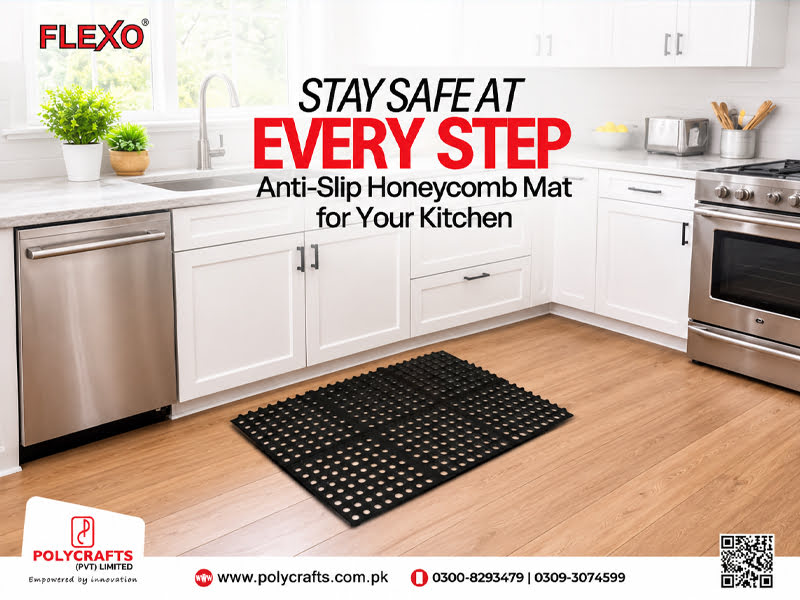
- Honeycomb Texture Mats: Feature honeycomb-patterned surfaces.
- Interlock Mats: Connectable rubber sections for flexible floor coverage.
- Lines Texture Rubber Mats: Have a linear surface texture.
- Rubber Weaving Mats: Have woven-pattern designs for floor coverage.
These options let buyers compare different surface designs based on their intended application. For product-specific details, including dimensions and thickness, refer to the relevant Flexo Mat product specifications.
Where Can Rubber Mats Be Used?
Depending on their construction, texture, and thickness, Polycrafts rubber mats can be considered for a variety of residential, commercial, and industrial applications.
- Factories and workshops
- Commercial kitchens
- Gyms and fitness centers
- Industrial walkways
- Hospitals and laboratories
- Residential entrances
- Commercial buildings
- Warehouses
The correct choice will obviously depend on footfall, the environmental conditions, and the specific flooring requirements of each space.
Rubber Mats vs Other Mat Types
| Feature | Rubber Mat | Fabric Mat | Foam Interlocking Mat |
| Water resistance | Generally good | Usually limited | Depends on material |
| Comfort | Firm | Soft | Cushioned |
| Cleaning | Generally easy | May require washing | Depends on design |
| Durability | Suitable for demanding use | Varies by fabric | Varies by foam quality |
| Common use | Workshops, gyms, entrances | Homes and offices | Fitness and play areas |
These are the general material characteristics. Actual performance will vary according to product construction and manufacturer specifications.

What Should You Check Before Buying Floor Mats?
Before you pick a mat you need to consider the conditions in which it will be used.
- Location: Whether it’s to be installed indoors, outdoors or in a wet location.
- Material: Compare rubber, PVC, fabric, and foam according to the application.
- Thickness: Consider the cushioning, the stability, and the clearance around doors and equipment.
- Surface design: Check the texture, the drainage openings, the edges and the slip resistance information.
- Maintenance: Check the cleaning instructions and drying requirements.
- Foot traffic: Select a construction appropriate for the anticipated level of use.
For industrial use, you should also check the temperature rating, chemical compatibility, and load capacity, where applicable. All of these properties must be verified via the product data.
Why Consider Polycrafts for Floor Mats?
Selecting suitable mat starts with understanding your space’s demands. Polycrafts offers its Flexo Mat range in different surface textures and configurations for residential, commercial, and industrial flooring applications.
Whether you need everyday floor protection, flexible interlocking floor mats, or a durable rubber floor mat, compare the material, construction, maintenance requirements, and intended use before making a decision.
Contact Polycrafts to discuss your flooring requirements and find a suitable mat option.
Frequently Asked Questions
Which floor mat is best for wet areas?
Rubber mats are the usual choice for wet areas. You’ll generally be looking at the drainage requirements, the level of surface grip you need, and what the manufacturer says is the appropriate application.
Are rubber floor mats waterproof?
Lots of rubber mats are going to be moisture resistant, but not all of them are actually waterproof. Always check the manufacturer’s specifications prior to installation.
Can interlocking floor mats be used outdoors?
Yes, as long as the material and construction suit outdoor exposure. Check weather resistance, drainage, and installation requirements.
Which floor mats are suitable for industrial areas?
Heavy-duty rubber mats and appropriately specified interlocking mats may suit industrial environments. Consider chemical exposure, temperature, load capacity, and workplace safety requirements.
How often should floor mats be cleaned?
Cleaning frequency depends on foot traffic, dirt accumulation, and moisture exposure. Wet and high-traffic areas may need daily cleaning or more frequent attention.
References
- UK Health and Safety Executive (HSE): Slips and Trips in Retail Environments.
- UK Health and Safety Executive (HSE): Slips and Trips in Waste and Recycling.
- US Occupational Safety and Health Administration (OSHA): 29 CFR 1910.22, General Requirements.
- Stanford University Environmental Health & Safety: Slip, Trip and Fall Prevention.