

Choosing between concrete and rubber wheel stoppers comes down to three main factors: installation, durability, and visibility. Concrete provides greater weight and rigidity, while rubber is generally easier to handle, install, see, and replace.
For many modern parking facilities, rubber wheel stoppers offer a practical solution because they are lightweight, easier to install, highly visible, and simpler to replace. Concrete can still be suitable where a heavier, rigid wheel stop is preferred.
The right choice depends on the parking environment, vehicle types, surface, installation requirements, and budget.
What Is A Wheel Stopper?
Before we compare, let’s keep it basic. A wheel stopper is that small block placed at the front of a parking spot to stop your car’s tire from going too far forward. Simple job, but a genuinely important one; without a stopper, someone eventually rolls into a wall, a fence, or worse, another car.
You’ll usually find two main types:
- Concrete wheel stoppers
- Rubber wheel stoppers
Both do the same basic job, but how they do it is where things get interesting.
According to NHTSA, studies have found that parking-lot and driveway-related incidents can account for 15% to 25% or more of reported pedestrian crashes.
Important: Wheel stoppers are parking-positioning devices, not crash barriers. Drivers should approach them slowly. They are not designed to stop vehicles traveling at significant speed.
What Are Concrete Wheel Stoppers?
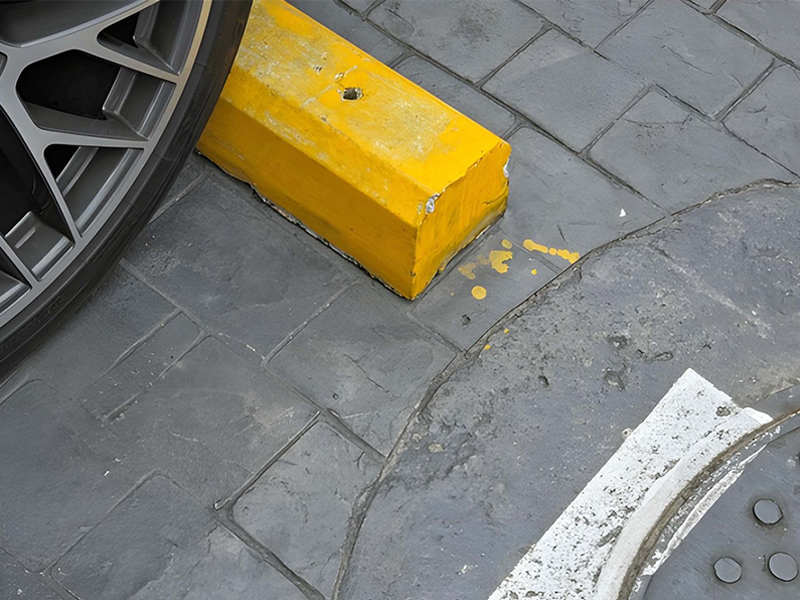
Concrete wheel stoppers are rigid, heavy, and commonly used in permanent parking installations.
Advantages
- High weight provides substantial stability.
- Suitable for many outdoor parking applications.
- When manufactured correctly, they resist normal sunlight and weather exposure.
- Can provide long service life under appropriate conditions.
Limitations
Concrete is rigid and can crack or chip under repeated or heavy vehicle traffic. Damaged edges may also require repair or replacement.
Because concrete units are heavy, transportation, positioning, and replacement can require more labor or handling equipment. Visibility can also be limited unless you maintain contrasting paint or other markings.
What Are Rubber Wheel Stoppers?
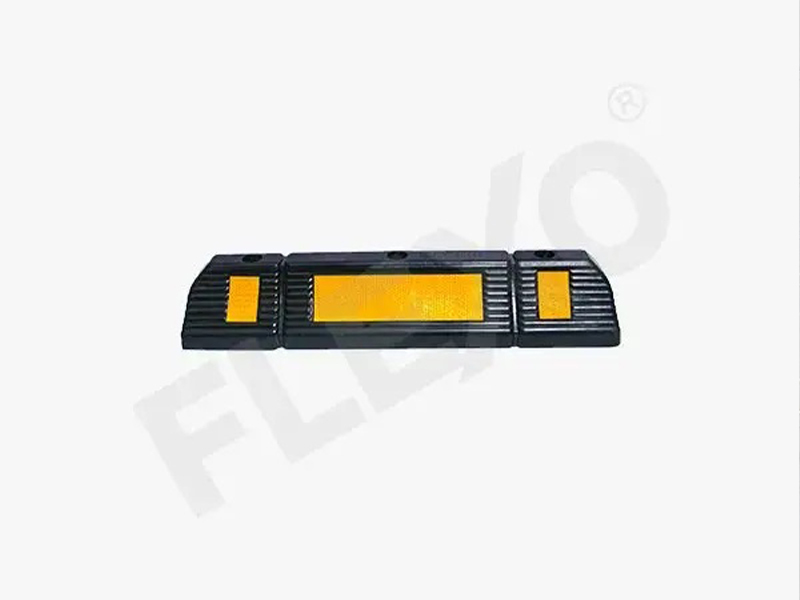
Rubber wheel stoppers are increasingly used in residential, commercial, and covered parking environments.
Advantages
- Easier to transport, position, and replace.
- Flexible material tolerates normal tire contact without chipping like concrete.
- Commonly available with highly visible contrasting or reflective markings.
- Suitable for many indoor and outdoor parking applications.
- Installation is relatively straightforward when you use the correct anchors.
Limitations
Rubber wheel stoppers must be properly secured to the parking surface. Incorrect or loose fixings can allow movement.
Product quality also matters. Rubber formulations vary, and prolonged exposure to heat, sunlight, chemicals, traffic, and other environmental conditions can affect long-term performance.
Quick Comparison: Concrete vs Rubber Wheel Stoppers
Here is a simple comparison to make the choice easier:
| Feature | Concrete Wheel Stopper | Rubber Wheel Stopper |
| Weight | Heavy | Lightweight |
| Handling | Difficult | Easy |
| Installation | Generally more labor-intensive | Generally easier to handle and install |
| Anchoring | Surface-dependent | Needs suitable fixings |
| Vehicle Contact | Rigid | Flexible |
| Visibility | May need markings | Often high-visibility |
| Replacement | More difficult | Easier |
| Weather Exposure | Good for outdoor use | Depends on product quality |
| Maintenance | Check cracks, chips & fixings | Check damage, movement & fixings |
| Typical Applications | Permanent outdoor parking | Homes, offices & commercial parking |
| Best Suited For | Weight & rigidity | Easy handling, visibility & installation |
The right option depends on your parking environment, vehicle types, surface, traffic level, and budget.
Disclosure: Polycrafts manufactures and supplies rubber wheel stoppers, including the WS-01 and WS-02 models. This article compares rubber and concrete wheel stops, but readers should be aware that Polycrafts has a commercial interest in rubber parking products.
Which Is Easier to Install?
Would you want to spend extra time and workforce moving heavy concrete blocks?
Concrete wheel stoppers can be difficult to handle because of their weight. For larger parking projects, transporting and positioning multiple concrete units may require additional workers or equipment.
Based on our experience supplying rubber parking products, one practical advantage of rubber wheel stops is their lower handling weight compared with conventional precast concrete units, which can simplify positioning and replacement.
The National Safety Council states that its analysis of government data indicates 9% of pedestrian deaths in parking lots result from backup incidents.
For facilities with ample parking, this can speed up installation.
Which Handles Everyday Vehicle Contact Better?
Both products provide a stopping point for vehicle tires, but their materials react differently.
Concrete is very rigid. Repeated or heavy impacts can eventually cause cracks, chips, or damaged edges.
Rubber offers greater flexibility during normal tire contact. This can make rubber wheel stoppers suitable for locations where vehicles frequently enter and leave parking spaces.
However, wheel stoppers are not crash barriers. Drivers should always approach them slowly. They guide the final parking position, not stop a vehicle moving at high speed.
Which Is Better for Visibility?
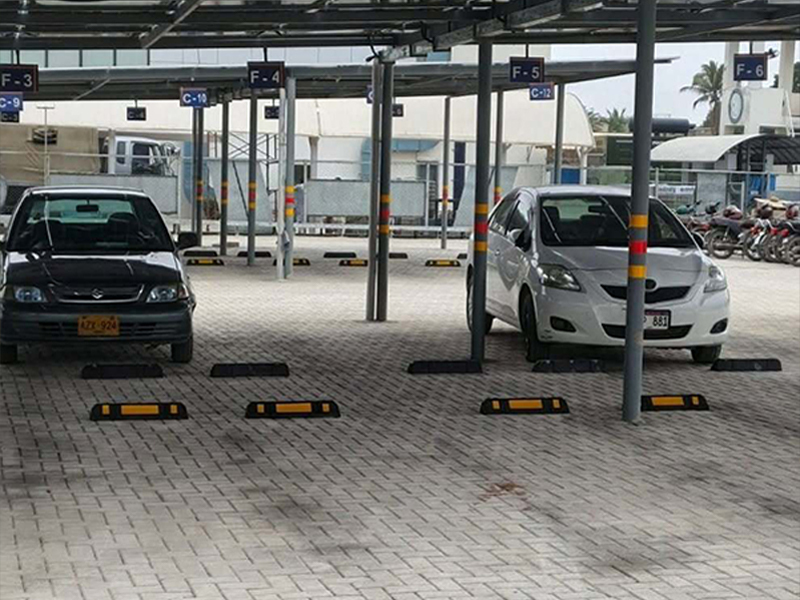
Visibility is an important part of parking safety. If a stopper is difficult to see, drivers may approach it too quickly.
Many rubber wheel stoppers feature bright or reflective markings. These can help make the stopper easier to identify in:
- Underground parking areas
- Shopping mall parking lots
- Warehouses
- Parking spaces used at night
- Areas with limited lighting
You can also paint concrete wheel stoppers for better visibility, but the paint may require maintenance over time.
Which Requires Less Maintenance?
Inspect both types regularly to ensure they remain correctly positioned, securely fixed, visible, and free from significant damage.
Check concrete units for cracks, chips, and damaged edges. Check rubber units for movement, physical damage, deterioration, and the condition of their fixings and visibility markings.
The product’s material, installation method, environment, and frequency of vehicle contact all influence its service life.
Where Can Rubber Wheel Stoppers Be Used?
Rubber wheel stoppers for cars can work well in many parking environments, including:
- Shopping malls and supermarkets
- Office buildings
- Residential apartments
- Schools and hospitals
- Hotels and restaurants
- Warehouses and industrial facilities
- Public and private parking lots
Before installation, select the correct size and fixing method for the parking surface.
Why Should Product Quality Matter?
Is choosing the cheapest wheel stopper always a good idea? Not necessarily.
Material quality can affect durability, visibility, and long-term performance. A low-quality product may require replacement sooner, increasing maintenance costs.
When comparing rubber wheel stopper and parking safety product suppliers, consider:
- Material quality: Check whether the product is designed for regular contact with vehicles.
- Product dimensions: Choose a suitable size for the vehicles that will use the parking area.
- Visibility: Look for clear or reflective markings, as needed.
- Installation method: Make sure the stopper can be properly secured to the surface.
- Weather resistance: Outdoor products should suit local environmental conditions.
- Supplier reliability: Choose a manufacturer or supplier that can provide consistent product quality and support.
These factors can help businesses make a more practical long-term choice.
When Should You Choose Concrete?
Concrete wheel stoppers can be appropriate when:
- A heavy, rigid wheel stop is preferred.
- Handling and installation equipment is readily available.
- The installation is intended to remain permanently in place.
- Concrete suits the project’s existing parking specifications.
When Should You Choose Rubber?
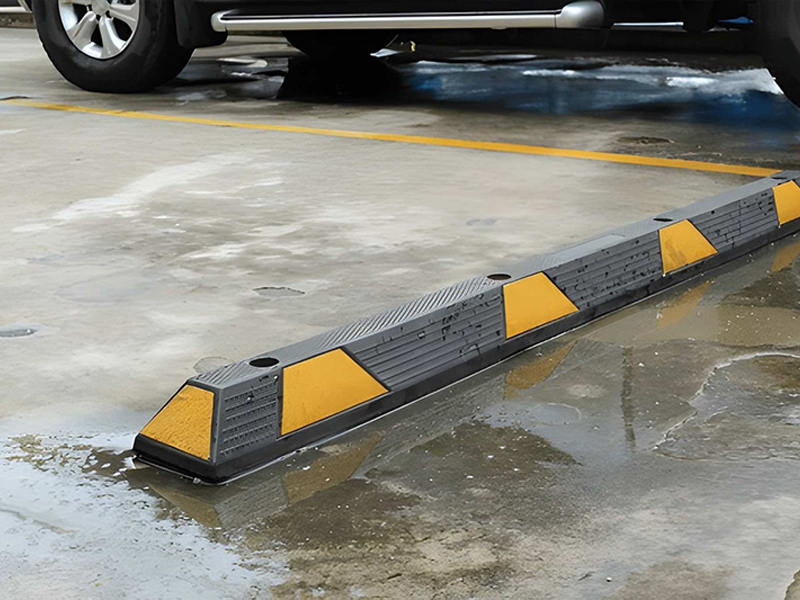
Rubber wheel stoppers can be a practical choice when:
- Easier transportation and installation are priorities.
- High visibility is important.
- You may need to reposition or replace units in the future.
- Resistance to concrete-style cracking and chipping is desirable.
- The facility has multiple parking spaces, so installation must be efficient.
For many offices, residential developments, shopping facilities, factories, warehouses, and other modern parking environments, rubber wheel stoppers are particularly convenient.
Which Wheel Stopper Is Better?
No single material is best for every parking facility.
Concrete wheel stoppers provide substantial weight, rigidity, and proven suitability for permanent parking installations.
Rubber wheel stoppers offer easier handling, greater flexibility, improved visibility, and simpler replacement.
For facilities prioritizing installation efficiency, visibility, and straightforward maintenance, a properly specified and securely installed rubber wheel stopper is often the more practical option.
The key phrase is properly installed. Material alone does not determine parking safety. Positioning, dimensions, anchoring, visibility, vehicle compatibility, inspection, and compliance with applicable requirements matter just as much.
Polycrafts Rubber Wheel Stoppers
Polycrafts offers two rubber wheel stopper models, WS-01 and WS-02, designed for light commercial vehicles. Both feature molded reflective tape for increased visibility and help prevent vehicles from encroaching on property and pedestrian walkways.
| Model | Length | Width | Height |
| WS-01 | 24″ | 5″ | 4″ |
| WS-02 | 48″ | 6″ | 4″ |
With two size options, businesses can choose the model that best suits their parking layout and vehicle requirements.
Closing Thoughts
Concrete wheel stoppers offer strength and stability, while rubber wheel stoppers provide easier installation, better visibility, flexibility, and simpler maintenance. For many modern parking areas, rubber is a practical option for improving safety and organization.
When selected, positioned, installed, and maintained correctly, wheel stoppers can help organize parking spaces and reduce the risk of vehicles encroaching into designated areas.
Contact Polycrafts today for practical rubber wheel stopper solutions.
Frequently Asked Questions
Are rubber wheel stoppers suitable for outdoor parking?
Yes. Quality rubber stoppers can withstand normal outdoor conditions when properly installed.
How far should a wheel stopper be installed from a wall or curb?
It depends on the vehicle, parking layout, and applicable requirements. Install it to provide adequate clearance.
What size wheel stopper should I choose?
Choose based on vehicle type, parking-space size, and required stopping position.
Are wheel stoppers suitable for SUVs and larger vehicles?
Yes, if the stopper is appropriately sized and rated for the vehicle.
How long do rubber wheel stoppers last?
Their lifespan depends on material quality, traffic, weather, installation, and maintenance.
References:
- NHTSA — Pedestrian Safety: Data/Surveillance
- National Safety Council — Parking Lots & Distracted Driving